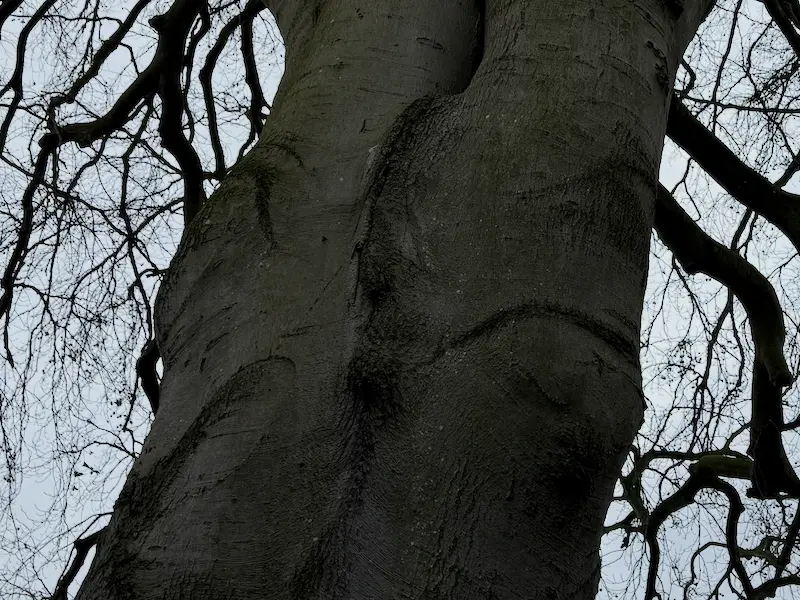
One common cause of cracks and structural weakness in trees is the presence of co-dominant stems. Understanding what these are, and why they can be a problem, can help identify potential risks before failure occurs.
What Are Co-Dominant Stems?
The term “co-dominant stems” is used to describe two or more main stems (often referred to as leaders) that are similar in diameter and originate from the same point on the main trunk.
As the tree matures, neither stem becomes dominant. Instead, they continue to grow at a similar rate, which can create a structurally weak junction between them.
Why Are Co-Dominant Stems Important to Recognise?
- Co-dominant stems are more likely to fail, particularly during high winds or storms
- Although they may appear sound, hidden weaknesses can develop within the union
- Early identification allows remedial work to be carried out before the tree becomes unsafe
- Many common tree species in the UK are prone to forming co-dominant stems
Assessing the Risk of Co-Dominant Stems
Co-dominant stems can be broadly assessed by considering three stages of risk. This can help guide appropriate management decisions.
Stage 1: Shape of the Union
Does the junction between the stems form a narrow “V” shape, with no other visible symptoms?
- A “V”-shaped union is more likely to fail than a “U”-shaped union
- As the stems grow, bark becomes compressed between them
- This compression limits the amount of solid wood connecting the stems
Stage 2: Signs of Decay
Are there visible indicators that decay may be present within the union?
- Rotted or soft material visible between the stems
- Fluid or staining emerging from the junction
- Small woody plants growing within the union
- Pronounced swelling or “ears” on either side of the junction
Stage 3: Signs of Failure
Is there evidence that the union is already beginning to fail?
- Visible cracks forming within the junction
- Rapid development of reaction wood at the base of the stems
- Movement or separation between the stems
What Should You Do?
If you have a tree with co-dominant stems and are concerned about its condition, it is advisable to seek advice from a trained professional. Tree-related risks are often not obvious to the untrained eye, and early intervention can prevent more serious problems developing.
You can contact Dragon Tree Services for professional advice and assessment. We can inspect trees of concern and recommend appropriate tree surgery solutions, where necessary.
This information is intended to aid understanding of common tree structural issues and should not be considered a full tree hazard assessment.