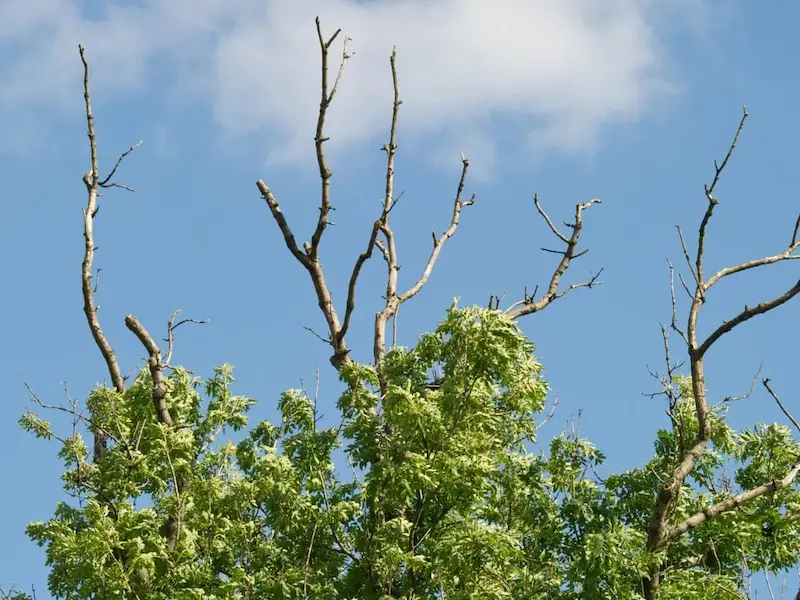
The Facts
- What is ash dieback? A serious tree disease.
- What causes it? A fungus called Hymenoscyphus fraxineus.
- Also known as: Ash dieback, Chalara, Chalara ash dieback.
- Affected trees: Common ash (Fraxinus excelsior), both young and mature.
- Areas affected: The whole of the UK.
- Prognosis: The disease is now endemic.
- Origin: Asia, arriving in the UK via Europe.
The latest information shows that ash dieback has now taken hold across much of the UK, including here in North Wales. The disease is expected to have a major impact on our countryside, much of which is shaped by hedgerows, hedgerow trees, small copses and woodland.
Evidence suggests that more than 90% of ash trees may be lost. If this happens, the character of our landscapes will change significantly, with the loss of trees, hedgerows and the wildlife they support.
Why Ash Dieback Is Such a Concern
Ash trees are an important feature of our landscape and are commonly found in woodlands, hedgerows and along roadsides. Ash is one of our three main hedgerow trees, alongside oak and beech, and makes up around 16% of hedgerow tree cover.
The airborne spread of the disease has continued, and the effects on ash trees in towns, gardens and the wider countryside are now becoming increasingly visible.
What You Can Do
If you own land or property with ash trees, it is important to manage the risks associated with ash dieback. Landowners are responsible for managing the health and safety risks posed by trees on their land.
Ash trees near highways, footpaths, rights of way or areas with high public access should be monitored regularly for signs of infection. Do not wait until a mature tree becomes unsafe before seeking advice.
If you are concerned about an ash tree, you can contact Dragon Tree Services for professional advice. We can inspect affected trees and provide guidance along with a free, no-obligation quote for any tree surgery work that may be required.
Symptoms of Ash Dieback
Ash dieback can present a range of symptoms. It is important to note that some of these symptoms may also be caused by other issues, so a final diagnosis should always be made by an experienced professional.
Summer is the best time to look for symptoms, as ash trees naturally shed their leaves in autumn and winter, making identification more difficult.
- Dark lesions on the trunk, often long, thin and diamond-shaped, typically at the base of dead side shoots
- Blackened and shrivelled shoot tips
- Blackened, dead leaves that may resemble frost damage
- Leaf veins and stalks turning brown rather than their usual pale colour
- Dead tops and side shoots on saplings
- Dieback of twigs and branches in the crown of mature trees, often with bushy regrowth lower down
- Small white fruiting bodies on blackened leaf stalks from July to October
How the Disease Spreads
Ash dieback is spread primarily by airborne spores released from fungal fruiting bodies found on fallen ash leaves. These spores can be carried by the wind over distances of tens of kilometres.
Before the movement of ash trees was banned in October 2012, the disease is also believed to have spread over longer distances through the transportation of infected plants.
Looking Ahead
The full long-term impact of ash dieback is still unknown. Evidence suggests that young trees often die quickly, while some mature ash trees can tolerate infection for a period before eventually declining or becoming vulnerable to other pests and diseases.
Scientists have identified individual ash trees that appear to be less susceptible to the disease. These findings, combined with resistance breeding trials, offer some hope for the future, although it will take time to understand how successful these efforts may be.